
Fibre laser marking for high‑speed beverage canning: what really matters

Sascha Ammesdörfer
Director Market Intelligence, Videojet
fibre laser marking, beverage canning, fibre laser for cans, high speed canning lines, dual marking heads, washdown
High‑speed beverage canning lines demand reliable marking at sustained speeds, often in humid, sugar‑laden environments with frequent washdowns. Fibre lasers are increasingly evaluated not just on marking capability, but on how well the systems fit the line, withstand the environment, and support consistent code quality day after day.
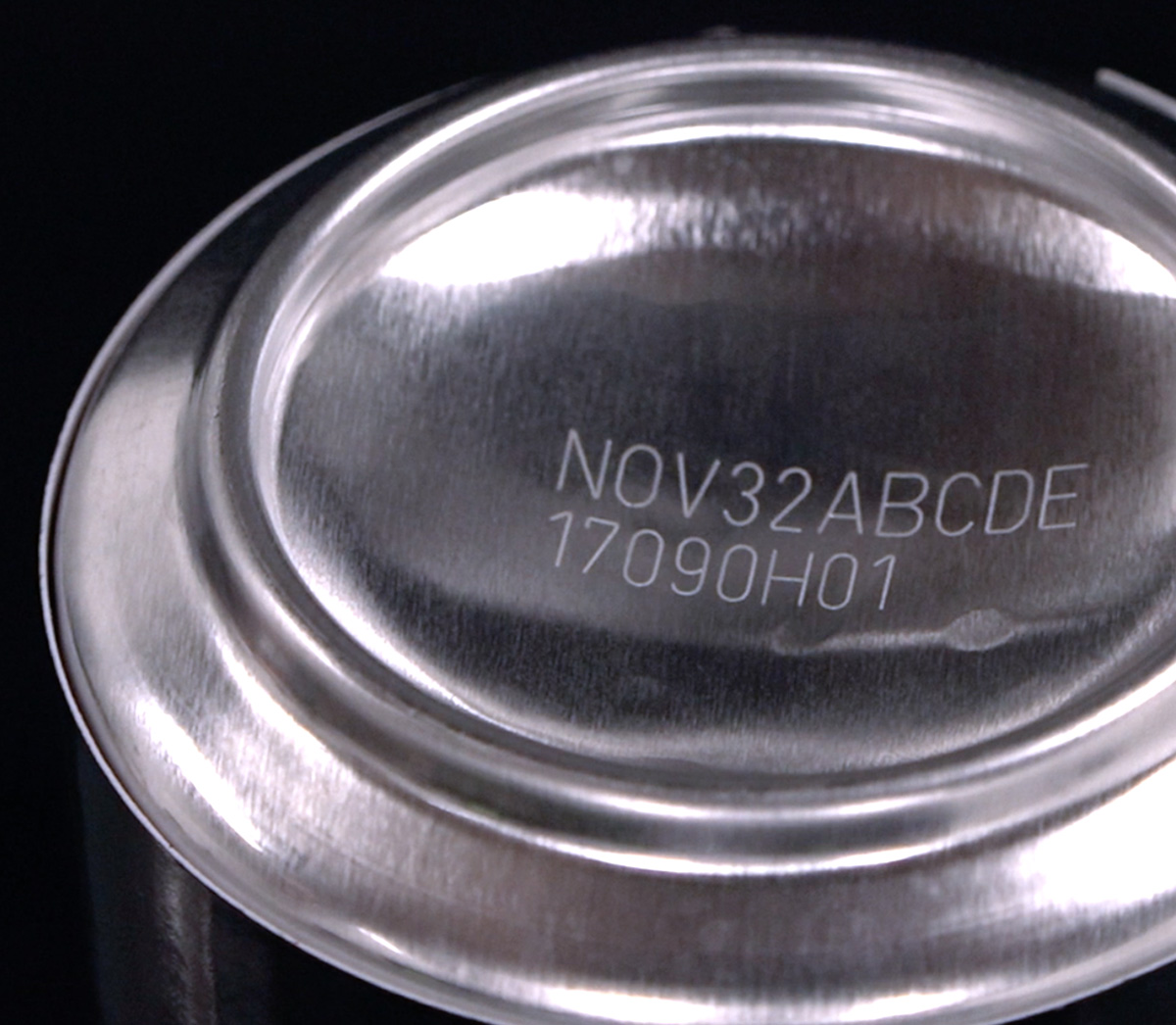
Compared to print‑based technologies, fibre laser marking removes dependence on ink and solvent fluids and eliminates the need for ribbon consumables, while delivering clean, permanent codes suitable for beverage cans. For operations teams, the value typically shows up as durability, reduced routine intervention, and stable performance at high line speeds, provided the system is designed for high‑speed canning line conditions.
Why fibre lasers are used on high‑speed canning lines
Fibre lasers are commonly selected for beverage canning because they create permanent, high‑quality codes without ink, solvent fluids, or ribbon consumables. This can be helpful in environments where moisture, sugar residue, CO₂ in the air, and frequent washdowns challenge other coding technologies.
When properly engineered and integrated, fibre laser systems can maintain code quality at sustained line speeds while supporting sanitation requirements and minimizing routine operator intervention.
Are laser power and speed the limiting factors on canning lines?
Fibre lasers are often compared by wattage (20W, 30W, 50W, or 100W) or stated throughput figures. These metrics matter, but they do not always predict real‑world performance on a beverage canning line.
In practice, line reliability is more often influenced by system‑level factors such as:
- The ability to maintain consistent code quality at sustained line speeds
- System performance during and after washdown cycles
- Sensitivity to dust, sugar, or condensation near the beam exit
- Safety design and ease of routine operator access
For many beverage manufacturers, this means looking beyond stated specifications to how reliably a fibre laser performs in daily production.
What do beverage production environments demand from fibre laser systems?
Beverage plants combine moisture, sugar, CO₂, and frequent sanitation cycles. Fibre laser systems intended for these environments must be engineered to tolerate those conditions without frequent adjustment or removal.
Key design considerations
- Ingress protection suited to washdown and hygienic zones, such as fibre laser marking heads rated IP69 for direct washdown exposure and cabinets rated IP65 for wet environments
- Compact marking heads that fit tight conveyor layouts
- Safety classifications, such as Class 1 enclosures, that simplify compliance and daily operation
Expert insight
“On high speed canning lines, performance is not just about marking speed or wattage. The challenge is maintaining consistent code quality through washdowns, contamination events, and routine operator access. In practice, consistent performance in washdown environments and during routine operator access often has a greater impact on uptime than marking speed or wattage alone.”
How do dual marking heads help keep high‑speed canning lines running?
At high canning speeds, even short interruptions can have a measurable impact on output. When a canning line relies on one marking head, contamination or required service can interrupt production at the marking stage.
Use of a dual marking head configuration can allow operators to continue production under defined conditions if one head requires attention. A controlled transition to single‑laser operation can support production continuity and sustained code quality without adding unnecessary complexity at the line level.
Which fibre laser configurations are used in beverage applications?
Fibre lasers used in beverage operations generally fall into several common power and configuration ranges. Selection typically depends on marking content, line speed, environmental exposure, and the amount of operator access expected during routine production.
20–30W fibre lasers
20–30W fibre lasers are commonly selected where high line speeds, compact integration, and fine code detail are required. Systems like the 20W Videojet 7340 and 30W Videojet 7440 are often evaluated for high‑speed canning lines, where space around the conveyor is limited and washdown is part of daily operations.
Dual 30W fibre laser configurations for high‑speed canning
On very high‑speed canning lines, the way the laser system is designed can be as important as individual laser performance. Using two mid‑power fibre lasers within a single enclosure allows marking demands to be shared and can help reduce the impact of routine interruptions at the marking stage.
The Videojet Lightfoot™ canning solution is one example of a dual 30W fibre laser configuration, using two 7440 laser sources within a purpose‑built, Class 1 enclosure designed specifically for space‑constrained, washdown‑intensive beverage canning lines.
50W/100W fibre lasers
50W fibre lasers are typically applied where greater marking energy or larger marking windows are required on robust materials, rather than onspace‑constrained, high‑speed canning conveyors. In beverage operations, these systems are more commonly evaluated for applications such as can ends (lids), caps, closures, or other rigid packaging components outside the main canning line.
Systems like the 50W Videojet 7510 and 100W Videojet 7610 are often evaluated for these applications, while high‑speed canning lines typically rely on solutions designed specifically for continuous operation, compact integration, and washdown conditions.
What defines the right fibre laser strategy for canning?
Choosing the right fibre laser approach is rarely about a single specification. It typically requires aligning the technology with real‑world operating conditions, including:
- Line speed and message complexity
- Environmental exposure and sanitation practices
- Safety and routine operator access requirements
- The ability to maintain production continuity during routine interventions
Evaluating these factors early can help avoid solutions that look strong in demonstrations but introduce operational compromises once installed.
FAQs
Fibre lasers are commonly used in beverage canning because they create permanent, high‑quality codes without ink, solvent fluids, or ribbon consumables. This can be helpful on high‑speed lines where moisture, sugar residue, and washdowns challenge other coding technologies.
Yes, when properly selected and integrated. Fibre laser systems designed for beverage canning can maintain consistent code quality at sustained line speeds, even in space‑constrained conveyor layouts and washdown‑intensive environments. Performance depends less on raw laser power and more on how well the system is designed for continuous operation, sanitation requirements, and routine access on high‑speed canning lines.
In beverage applications, fibre lasers are commonly used to mark coated aluminium cans, metal containers, ends, caps, and closures. Different power levels and system configurations are used depending on the packaging format and line conditions.
Dual marking head configurations are designed to support production continuity. If one marking head requires attention, operators may be able to continue production under defined conditions, reducing the likelihood of a complete line stop.
Bottom line
High‑speed beverage canning typically rewards fibre laser systems that are designed for washdown environments, routine operator access, and consistent code quality at sustained speeds. Wattage alone rarely describes day‑to‑day performance on a canning line.
Go deeper
- Videojet article: The comprehensive guide to choosing a laser marking system
- Videojet blog: Laser marking vs. CIJ printing: Which coding technology is right for your packaging line?
- Videojet guide: The Essential Guide to Laser Safety: Beam Shielding and Fume Extraction
- Videojet article: Coding and Marking – Metal Cans | Videojet


